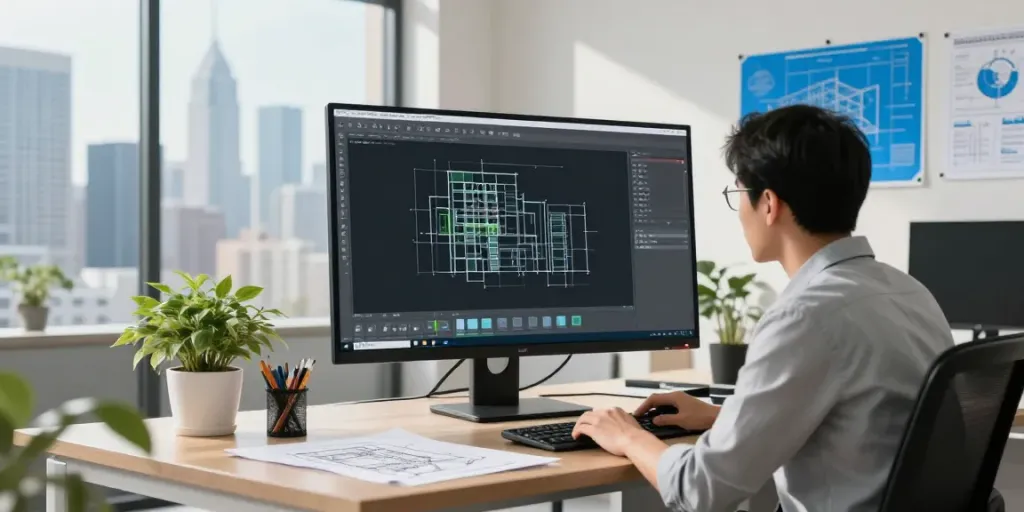
Understanding the Importance of Revit Drafting Services
In the ever-evolving architecture, engineering, and construction (AEC) industries, the adoption of advanced technologies such as Building Information Modeling (BIM) and Revit drafting services has transformed traditional workflows. Revit, a leading parametric modeling software, enables professionals to create detailed architectural designs, enhanced visualizations, and efficient project documentation. As these sectors strive for precision and collaboration, understanding the benefits of revit drafting services has become paramount for success.
What are Revit Drafting Services?
Revit drafting services encompass a range of processes designed to produce detailed design documentation using Autodesk Revit. These services are fundamental to producing accurate architectural drawings, structural models, and MEP (mechanical, electrical, and plumbing) layouts. Unlike traditional drafting methods, which primarily rely on 2D drawings, Revit enables the creation of 3D models that encapsulate the entire project lifecycle, from planning through construction to facility management.
Benefits for Architects and Engineers
The integration of Revit drafting services offers numerous advantages to architects and engineers:
- Enhanced Visualization: Three-dimensional models provide a clearer sense of the project, enabling better communication with clients and stakeholders.
- Improved Accuracy: The parametric nature of Revit ensures that changes made to one part of the model are reflected throughout the entire document, reducing errors and discrepancies.
- Streamlined Collaboration: Revit supports collaborative work environments, allowing multiple contributors to work on a single model simultaneously, improving productivity.
- Effective Project Management: Built-in tools for scheduling and cost estimation assist in maintaining project timelines and budgets.
The Role of Technology in Enhancing Services
As technology continues to advance, Revit drafting services are evolving to incorporate additional functionalities, improving service delivery. Features such as cloud collaboration, augmented reality (AR), and virtual reality (VR) are becoming increasingly integrated into Revit workflows, enabling a more immersive and interactive design experience.
Key Features of Professional Revit Drafting Services
Precision and Accuracy in Drafting
One of the most significant benefits of using Revit in drafting services is the precision it offers. By utilizing parametric modeling, Revit allows for detailed design specifications that meet exacting industry standards. This level of accuracy is fundamental in avoiding costly revisions during the construction phase.
Integrating BIM for Efficient Project Management
BIM is a cornerstone of Revit drafting services, enabling comprehensive analysis and optimization throughout the project lifecycle. With BIM, stakeholders can visualize the entire workflow, from design to construction, ensuring a cohesive approach that minimizes delays and enhances efficiency.
Collaboration Between Stakeholders
Revit's collaborative capabilities foster communication among architects, engineers, contractors, and clients. This interconnectedness not only improves workflow but also enhances the decision-making process by providing all stakeholders with real-time access to project data.
Common Challenges in Revit Drafting Services
Managing Complex Design Changes
As projects evolve, managing design changes can be challenging. Revit's model-based approach aids in tracking modifications, but it requires diligent management and timely updates to prevent inconsistencies.
Balancing Cost and Quality
Cost constraints often impact design choices. While Revit can enhance quality through its advanced features, budget limitations may require careful consideration to ensure a balance between cost and design integrity.
Adapting to Rapid Technological Advancements
The fast pace of technological change in the AEC industry poses a challenge for firms. Staying updated with the latest Revit features and BIM advancements necessitates ongoing training and development to maintain competitiveness.
Best Practices for Optimizing Revit Drafting Services
Implementing Standardized Procedures
Standardization in drafting procedures helps maintain consistency across projects. Establishing clear guidelines for model creation, layer management, and documentation ensures that all team members adhere to best practices.
Ensuring Continuous Training and Development
Investing in training for team members is crucial for maximizing the benefits of Revit drafting services. Regular workshops and webinars can help staff stay proficient in using the software's latest features, ultimately enhancing productivity.
Leveraging Cloud Collaboration Tools
Utilizing cloud-based platforms enables seamless collaboration among team members, irrespective of their physical locations. These tools facilitate real-time updates, ensuring that all stakeholders are working with the most current data.
Future Trends in Revit Drafting Services by 2026
Emerging Technologies in Drafting
The future of Revit drafting services will likely see an increased adoption of machine learning and AI. These technologies can analyze vast amounts of data for improved design decisions, predictive maintenance, and enhanced project outcomes.
Environmental Sustainability in Design Practices
As sustainability becomes a crucial focus in construction, Revit will play a key role in creating eco-friendly designs. Features that enable energy analysis, material optimization, and waste reduction will become increasingly prominent.
Predictions for Industry Growth and Demand
The demand for Revit drafting services is expected to grow as more firms realize the benefits of BIM integration. Industry reports suggest that companies prioritizing technology adoption can expect enhanced efficiency and competitiveness, driving further advancement in AEC methodologies.
What is the difference between Revit and AutoCAD?
Revit is primarily a 3D modeling tool focused on building design and construction documentation, while AutoCAD is a general-purpose 2D and 3D drafting application. Revit's parametric capabilities and BIM integration provide a more comprehensive solution for the AEC industry.
How can Revit drafting services improve project timelines?
By utilizing a single, integrated model, Revit drafting services minimize the time spent on revisions and updates, ensuring that all stakeholders are aligned, which leads to more efficient project timelines.
What are the costs associated with outsourcing Revit drafting services?
The costs of outsourcing Revit drafting services can vary based on project complexity, the provider's expertise, and geographical location. Generally, outsourcing can lead to cost savings compared to maintaining an in-house team.
Are Revit drafting services suitable for small firms?
Yes, small firms can greatly benefit from Revit drafting services. Access to advanced modeling tools can level the playing field, allowing smaller firms to compete effectively with larger competitors in the industry.
How to choose the right Revit drafting service provider?
When selecting a Revit drafting service provider, consider their expertise in BIM, their portfolio of past projects, and client testimonials to ensure they align with your specific needs and standards.